Iron Condor Strategy: Complete Guide to Neutral Options Trading
Published March 29, 2026
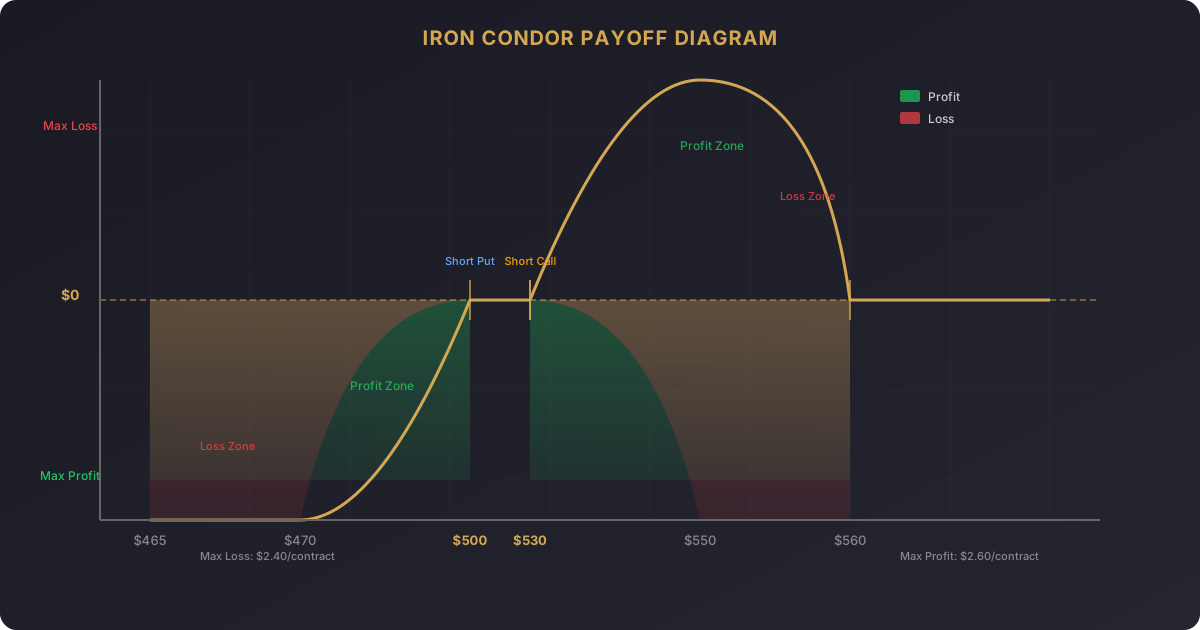
The iron condor strategy is one of the most popular neutral options strategies for traders who want to profit from time decay and volatility contraction — without betting on direction.
TL;DR: An iron condor sells both a call spread and a put spread, profiting when the underlying stays in a defined range. Enter when IV Rank is above 50 with 30-45 DTE. Take profit at 50% of max credit, stop out at 200% of risk. Maximum reward is the net premium collected; maximum risk is the spread width minus premium.
What Is an Iron Condor in Options?
An iron condor options strategy is a four-leg neutral strategy that profits when the underlying price stays within a specific range. It combines two credit spreads:
- Sell an OTM call spread (upper side)
- Sell an OTM put spread (lower side)
Think of it as selling volatility — you profit when the market does NOT move dramatically in either direction. If you want to understand the Greeks behind why this works, check out our Options Greeks guide.
Iron Condor Example Trade
Assume SPY is trading at $500.
| Leg | Strike | Action | Premium |
|---|---|---|---|
| Sell 1 Put | $470 | Sell to open | $2.50 |
| Buy 1 Put | $465 | Buy to open | $1.20 |
| Sell 1 Call | $530 | Sell to open | $2.30 |
| Buy 1 Call | $535 | Buy to open | $1.00 |
Net Credit: $2.50 + $2.30 - $1.20 - $1.00 = $2.60 per contract ($260 total for 100 shares)
Iron condor max profit: $2.60 per share if SPY stays between $470 and $530 at expiration.
Iron condor max loss: $5.00 - $2.60 = $2.40 per share if SPY closes below $465 or above $535.
How the Iron Condor Strategy Works Step by Step
1. Entry Rules (Pre-Trade Checklist)
- IV Rank: Above 50 (high IV = more premium)
- Days to Expiration (DTE): 30-45 days
- Liquidity: Use underlying with tight bid-ask spreads
- Delta: Sell strikes at roughly 10-15 delta
2. Strike Selection
Choose strikes based on your target probability of profit:
- Want 80% POP? Put short strike at ~20 delta, call short strike at ~20 delta
- Want 90% POP? Put short strike at ~10 delta, call short strike at ~10 delta
3. Exit Rules
Profit Target
Take profit at 50% of max profit (e.g., $1.30 of $2.60 credit)
Loss Threshold
Stop out at 200% of initial credit risk (e.g., $2.60 × 2 = $5.20 loss)
When to Use an Iron Condor
The iron condor neutral options strategy works best under these conditions:
- Neutral market: No clear directional bias
- High implied volatility: IV Rank above 50 indicates elevated option premiums
- IV contraction expected: After earnings or events pass
Why Time Decay (Theta) Matters
The iron condor theta decay works in your favor — each day, as long as the underlying stays in your profit zone, you earn from time decay. This is the main edge of the strategy.
However, be careful around earnings — the implied volatility collapse after earnings can hurt, but the rapid theta decay can help if you manage size properly.
Risk, Margin, and Realities
Iron Condor Margin Requirements
The margin for an iron condor equals the width of the widest spread minus the net credit received. For a 5-wide spread with $2.60 credit, margin is roughly $2.40 per share ($240 per contract).
Important: Some brokers offer portfolio margining, which can lower margin requirements based on your overall positions.
The Tail Risk Reality
While many articles highlight "90% win rate," they often ignore tail risk. A 10% loss can wipe out multiple wins. Factor in transaction costs, and the expected value may be negative for many retail traders.
Common Mistakes to Avoid
- Selling too close to earnings dates
- Ignoring transaction costs (commissions add up)
- Oversizing positions
- Confusing high probability of profit with positive expected value
Adjustment Strategies
When the trade moves against you, consider these adjustments:
Roll the Short Strike
If the underlying moves toward one short strike, roll that spread further out to collect more credit and reset the trade.
Convert to Iron Butterfly
If the trade goes deeply against you on one side, you can convert to an iron butterfly by closing one spread and keeping the other.
Take the Loss
Sometimes the best adjustment is to close the trade and move on. No strategy wins every time.
Iron Condor vs Iron Butterfly vs Credit Spread
| Strategy | Legs | Risk | Best For |
|---|---|---|---|
| Iron Condor | 4 | Limited | Wide neutral zone |
| Iron Butterfly | 3 | Limited | Target specific price |
| Credit Spread | 2 | Limited | Directional bias |
Advanced: SPX Iron Condor and 0DTE
The iron condor SPX strategy is popular because SPX settles cash and has tax advantages for options traders.
Zero Day Iron Condor (0DTE)
The zero day iron condor strategy has become extremely popular with retail traders. But the risks are different — read our 0DTE Options Risks guide before trading same-day iron condors.
Key Differences: 0DTE vs 30-45 DTE Iron Condors
- - Much shorter timeframe (same-day or next-day expiration)
- - Lower capital requirements
- - Higher gamma risk (rapid movement)
- - Needs tighter strikes and active management
Pre-Trade Checklist for Iron Condor
- ☐ IV Rank above 50?
- ☐ 30-45 DTE (or appropriate for your strategy)?
- ☐ Underlying has tight bid-ask spreads?
- ☐ No earnings until after expiration?
- ☐ Position size based on max loss, not max margin?
- ☐ Have profit target and loss threshold?
Is the Iron Condor Strategy Right for You?
Pros
- ✓ Defined risk and profit
- ✓ Benefits from theta decay
- ✓ Profits from IV contraction
- ✓ Works in neutral markets
Cons
- ✗ Tail risk can hurt
- ✗ Needs active management
- ✗ Transaction costs add up
- ✗ Margin can be significant
Start with paper trading to understand the mechanics before risking real capital. And remember — high probability does not equal positive expected value once you factor in costs and tail risk.
Ready to Apply the Iron Condor Strategy?
Make sure you understand the Greeks first — gamma and theta are the main drivers of iron condor performance. Our Options Greeks guide covers everything you need to know.
Learn the Greeks →Frequently Asked Questions
What is an iron condor strategy?
An iron condor is a neutral options strategy that profits when the underlying stays within a price range. It combines four legs: sell an OTM call spread and sell an OTM put spread, limiting both risk and profit.
What is the max profit and loss on an iron condor?
Max profit equals the net credit received. Max loss equals the width of the call spread (or put spread) minus the credit received. For example, if you sell a 5-wide spread and receive $2.00 credit, max loss is $3.00 per contract.
When should I enter an iron condor?
Enter when IV Rank is above 50-60, with 30-45 days to expiration. This maximizes theta decay while giving enough time for the trade to work out.
Can I trade iron condors on a small account?
Yes, many brokers now allow iron condors with modest margin requirements. Start with defined-risk strategies and small position sizes until you understand the mechanics and margin calls.
Final Thoughts
The iron condor strategy works when you understand the math and manage risk honestly. It is NOT a "set and forget" income strategy — you need to monitor positions and adjust when needed. Master the Greeks, understand your margin requirements, and always know your max loss before entering a trade.
About Andreas
I've been trading forex since 2009. Lost money early on like most traders, then spent years figuring out what works. Now I help others find tools and systems that actually speed up the learning curve.
Disclaimer: Trading options carries substantial risk. What I share works for me — your results depend on your discipline and risk management. Never trade money you can't afford to lose.