Forex Trading for Beginners: Complete Start Guide 2026
Published March 3, 2026
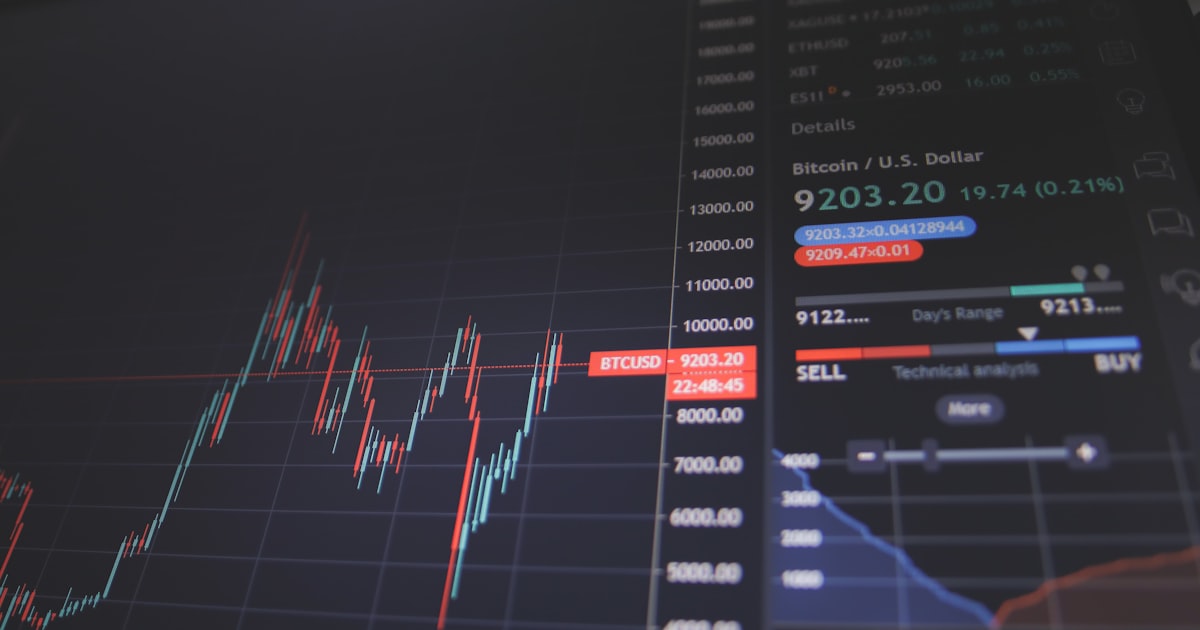
The forex market trades over $7 trillion daily—more than every stock market on Earth combined. If you've ever exchanged money before a vacation, you've technically done forex. The difference is professionals trade with serious capital, and most of them have lost plenty before becoming profitable.
I blew my first account in 2009. Learned the hard way that having opinions about price direction isn't enough—you need rules, patience, and humility. This guide covers what I wish someone had told me before I placed that first trade.
TL;DR: Open a demo account first. Master one major pair (usually EUR/USD). Never risk more than 2% per trade. If you can't make money on paper, you won't make it with real money.
What Is Forex Trading?
Forex stands for "foreign exchange." You're simultaneously buying one currency and selling another. They come in pairs—EUR/USD, GBP/USD, USD/JPY. When you buy EUR/USD, you're betting the euro will strengthen against the dollar.
The market runs 24 hours a day, five days a week. Markets open Monday morning in Sydney, move through Tokyo, London, and close Friday afternoon in New York. This means opportunities exist almost anytime—unlike stocks, which shut down at 4pm ET.
Here's what trips up beginners: you're not buying a company or an asset. You're exchanging one currency for another, hoping the rate moves in your favor. That's it. No dividends, no earnings calls—just currency values moving up and down.
Understanding Currency Pairs
Every trade involves two currencies. The first is the "base currency," the second is the "quote currency." EUR/USD at 1.0850 means 1 euro costs 1.0850 dollars. If the price rises to 1.0950, the euro gained value against the dollar.
Major Pairs
Major pairs include the US dollar paired with the world's strongest currencies: EUR/USD, GBP/USD, USD/JPY, and USD/CHF. These have the tightest spreads (cheapest to trade) and highest liquidity. Most beginners stick with EUR/USD—it's predictable and has the lowest costs.
Minor and Exotic Pairs
Minor pairs (like EUR/GBP) exclude the dollar. Exotic pairs (like USD/TRY—Turkish lira) pair a major currency with one from an emerging market. Expect wider spreads and wilder price swings. These are not for beginners.
Key Forex Terms
Pip
A pip is the smallest price move. For most pairs, it's the fourth decimal place (0.0001). For USD/JPY, it's the second decimal (0.01). When EUR/USD moves from 1.0850 to 1.0851, that's one pip. Your profit or loss depends on pips, so understand this before trading.
Lot Size
A lot is a package of currency. Standard lot = 100,000 units. Mini lot = 10,000. Micro lot = 1,000. Start with micro lots—you can trade a full unit of currency while only risking a few dollars per pip.
Leverage
This is where beginners get into trouble. Leverage lets you control bigger positions with less money. 100:1 leverage means $1,000 controls $100,000. Sounds great until a 1% move wipes out your account.
My advice: use 10:1 or lower until you've been trading for at least a year. The 70-80% of retail traders who lose money? Most of them blew up accounts using excessive leverage.
Margin
Margin is the money you need to open a leveraged trade. With 100:1 leverage, margin is 1% of your position. But here's the catch: you can lose more than your margin. A 2% adverse move with 50:1 leverage doesn't just wipe your margin—it destroys your account.
Spread
The spread is the gap between buy and sell price. It's your cost to trade. EUR/USD typically trades with 0.5-2 pip spreads. That might sound small, but it adds up—especially if you're trading frequently.
How to Start Trading Forex in 2026
Step 1: Learn the Basics
Don't deposit money until you understand what you're trading. Study currency pairs, how pips work, why leverage is dangerous, and why risk management matters. MetaTrader 4 and 5 offer free demo accounts—use them.
Step 2: Choose a Broker
Pick one regulated by serious authorities: FCA (UK), CySEC (EU), or ASIC (Australia). US traders should use NFA-regulated brokers. Check spreads, whether they allow your preferred trading style, and how fast they process withdrawals. candlestick patterns guide and risk management strategies before trading live.
Step 3: Practice on Demo
Spend 3-6 months on a demo account minimum. Treat virtual money like real—develop a strategy, track results honestly, and be honest with yourself about whether you're making progress. If you're break-even after 6 months, that's actually decent. Many never get there.
Step 4: Build a Strategy
A strategy gives you rules: when to enter, when to exit, how much to risk. Common approaches include trend following, range trading, and breakout trading. Pick one, test it, and stick with it long enough to see if it works.
Step 5: Go Live—Carefully
Start with the minimum deposit your broker allows. Use micro lots. The 2% rule isn't optional—it's the difference between surviving your learning phase and blowing up your account in weeks.
Risk Management: Your Survival Guide
Risk management is what separates the 20% who make money from the 80% who don't. No strategy works forever, but good risk management keeps you alive long enough to adapt.
- Never risk more than 2% per trade: This isn't my opinion—it's math. A 10-trade losing streak with 2% risk only drops your account 18%. At 5% risk, you're down 40%.
- Use stop-loss orders: Always know your maximum loss before you enter. Don't hope—plan.
- Risk-reward ratio of at least 1.5:1: If you risk 100 pips to make 100, you're fighting math. Aim to make more than you risk.
- Don't overtrade: Fewer, better trades beat many mediocre ones. Patience is a skill.
- Keep a journal: Record every trade, your reasoning, and how you felt. Review monthly. You'll spot patterns—both good and bad.
Common Beginner Mistakes
I've made every mistake on this list. Here's how to avoid them:
- Trading live before demo profitability: If you can't make money with zero risk, adding real money doesn't help—it just adds stress.
- Using excessive leverage: High leverage + small account = blowup. Guaranteed.
- Ignoring risk management: The 2% rule exists because traders before us learned the hard way.
- Trading without a strategy: Random entries produce random results. A strategy brings consistency.
- Letting emotions drive decisions: Fear and greed destroy accounts. After a loss, step away. Don't "make it back" immediately—that's revenge trading.
How Trading Systems Help
A trading system gives you rules—entry conditions, exit rules, position sizing. This removes emotional decision-making, which is where most traders fail. The best systems combine multiple indicators for confirmation, filtering out noise and reducing false signals.
I built Forex Probe to give beginners a structured framework. Multiple indicators (Stochastic, MACD, ATR, Ichimoku Cloud) confirm trades together, so you're not relying on one signal. This won't make you profitable overnight, but it gives you something to learn from. Our systems guide covers more options.
Ready to Start Your Forex Journey?
Forex Probe provides clear signals with multi-indicator confirmation to help you trade with structure. Start with the basics first—this is just a tool to speed up your learning.
Learn More →Frequently Asked Questions
How much money do I need to start forex trading?
Some brokers let you open accounts with $100-$500. But honestly? Starting with $1,000-$2,000 gives you room to trade proper position sizes without blowing up on the first mistake. The key isn't the amount—it's managing whatever you have.
Is forex trading legal?
Yes, it's legal in most countries including the US, UK, EU, and Australia. Regulations vary, so check your local requirements. The bigger question isn't legality—it's whether you can find a legitimate broker. Use only regulated ones.
Can I trade forex part-time?
Absolutely. Swing trading—holding positions for days or weeks—fits around a full-time job. You don't need to watch charts all day. Check your positions once or twice daily, set alerts, and move on with your life.
How long until I'm profitable?
Most traders need 1-3 years of consistent practice. Some never get there. Using a proven system can shorten the learning curve because you're working with established rules rather than figuring everything out from scratch. But there's no shortcut to discipline.
Final Thoughts
Forex trading offers real opportunity—but it's harder than it looks. The people making money aren't smarter than you; they've just learned to manage risk and stay patient.
Your first year shouldn't be about making money. It should be about learning to trade without losing it. Protect your capital, develop good habits, and profits will come. Or they won't—and you'll still have money left to try again.
This isn't a get-rich-quick thing. It's a skill that takes time to develop. Start with demo, respect the learning curve, and don't risk money you can't afford to lose.
Start Trading with Confidence
Check out our reviews of trading tools that can accelerate your learning.
View Reviews →About Andreas
I've been trading forex since 2009. Lost money early on like most traders, then spent years figuring out what works. Now I run multiple trading operations and help others find tools and systems that actually speed up the learning curve.
Disclaimer: Trading forex carries substantial risk. I've lost accounts, made mistakes, and learned from both. What I share works for me—your results depend on your discipline and risk management. Never trade money you can't afford to lose.